
Why Solar Panel Prices Are Dropping & How to Maximize Home Savings Now
Global market shifts are driving down solar panel costs, creating a perfect opportunity for U.S. homeowners. Learn how to maximize your savings and resilience with solar + storage.
Energy Solutions Team
Home Energy Specialists
The Perfect Storm: Why Now Is the Best Time to Invest in Solar Panel Prices and Savings
If you’ve been watching the solar market, you might have noticed some interesting headlines lately. The global industry is undergoing a massive transformation—and for you, the American homeowner, this shift translates directly into unprecedented opportunities for savings and quality.
At ProsperShield, we’re not just watching the trends; we’re interpreting them to ensure our customers get the absolute best value. The big takeaway? Solar panel prices are dropping, execution quality is rising, and home battery storage has officially moved from a luxury upgrade to a necessity.
Let’s pull back the curtain on the current state of the solar market and show you exactly how these global dynamics benefit your family, your wallet, and your energy independence.
Understanding the Global Adjustment: Cheaper Equipment, Higher Standards
For years, the solar industry was defined by explosive, rapid volume growth. That phase is stabilizing globally. While this might sound like a slowdown, it’s actually a sign of market maturity—and it’s excellent news for consumers.
The Great Price Drop: A Manufacturing Oversupply
The primary driver of falling equipment costs is simple economics: supply now far outstrips demand. Large-scale manufacturing capacity, particularly in Asia, has ballooned, embedding a structural surplus into the global PV (photovoltaic) supply chain. What does this mean for your residential installation?
It means the cost of the physical solar panels themselves has decreased significantly. This downward pressure on module pricing allows reputable installers like ProsperShield to offer more competitive overall system prices, making the initial investment more accessible than ever before.
The Shift from Volume to Execution Quality
When equipment was scarce and expensive, the competition was purely about who could get the panels installed the fastest. Now that panel costs are lower, the focus has shifted dramatically. The new rules of competition prioritize:
- System Integration: Ensuring all components (panels, inverters, batteries) work together perfectly.
- Policy Alignment: Navigating complex local and state regulations and incentives.
- Execution Quality: Flawless installation, permitting, and long-term customer service.
This is a massive win for homeowners. The market is weeding out low-quality, fly-by-night operations. Choosing a highly experienced EPC (Engineering, Procurement, and Construction) partner—one with a proven track record of 24,000+ installations across 42 US states—is now more important than ever to ensure your investment lasts for decades.
If you’re ready to capitalize on these lower equipment costs without sacrificing installation quality, start by getting a tailored estimate. Schedule a free consultation with a ProsperShield expert today.
The Non-Negotiable Necessity: Home Battery Storage
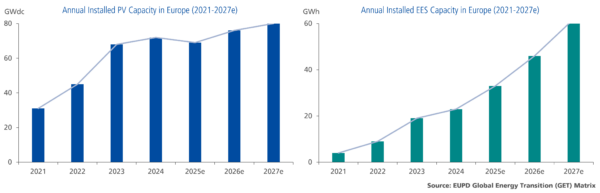
Perhaps the most significant finding from recent industry analysis is the central role of Home Battery Storage. For new residential solar installations, storage is no longer just a backup option; it’s becoming essential for maximizing savings and ensuring system viability.
Why Batteries Are Now Mandatory for Maximum ROI
The need for robust energy storage is driven by two major factors affecting homeowners across the country:
1. Grid Congestion and Curtailment Risk
As more solar comes online, the traditional electrical grid struggles to handle the influx of power, especially during the sunniest parts of the day. This leads to grid congestion. In some areas, utilities are starting to limit (or curtail) how much energy a solar system can send back to the grid, potentially reducing your net metering credits and your overall return on investment (ROI).
The Battery Solution: A home battery system captures the excess energy your panels generate during peak production hours. Instead of losing that power to curtailment or selling it back to the utility at a low rate, you store it for later use.
2. Peak Pricing and Volatility Mitigation
Many utilities are moving toward Time-of-Use (TOU) pricing, where electricity costs skyrocket during evening peak hours (typically 4 PM to 9 PM). This is precisely when most families get home and start using high-demand appliances.
The Battery Solution: Batteries enable load shifting. Your home runs off the cheap, stored solar energy during those expensive peak hours, allowing you to completely bypass the highest utility rates. This strategy drastically reduces your reliance on the grid when electricity is most expensive, guaranteeing predictable energy costs.
3. True Energy Independence and Resilience
Beyond cost savings, batteries provide unmatched peace of mind. Whether you live in an area prone to harsh weather, wildfires, or simply an aging infrastructure, power outages are a constant threat. Integrating a battery with your solar panels ensures your essential appliances—refrigerators, lights, medical equipment—stay running when the grid fails. This is the definition of Grid Resilience.
ProsperShield specializes in seamless PV-plus-storage solutions. We assess your unique energy profile and recommend the perfect battery capacity to ensure you maximize your savings, minimize grid reliance, and guarantee backup power. Explore our solar services and learn about the top-tier battery options we offer.
Taking the Holistic Approach: Beyond Just Panels
The global industry is emphasizing 'system integration'—meaning everything needs to work together. For homeowners, this means looking beyond just the panels on the roof. True energy efficiency and maximum savings come from treating your home as a single, connected energy ecosystem.
We often see homeowners install solar only to realize their massive energy needs are being driven by an inefficient HVAC system or poor insulation. If you want to maximize the impact of the current drop in Solar Panel Prices and Savings, you need to ensure your home is optimized first.
Practical Home Improvement Tips for Solar Success
1. Prioritize Insulation and Air Sealing
Before you generate power, focus on conserving it. A well-insulated home requires far less heating and cooling, immediately reducing the size (and cost) of the solar system you need. Studies show that proper insulation can cut energy bills by 10% to 50%.
2. Upgrade Your HVAC System
Heating and cooling account for the largest portion of the average American energy bill. If your HVAC unit is over 10 years old, upgrading to a high-efficiency system can drastically cut your energy load, making your new solar array even more effective. ProsperShield offers comprehensive HVAC services alongside solar installation, ensuring a unified approach.
3. Assess Your Roofing
Solar panels are designed to last 25 years or more. If your roof is approaching the end of its life, it’s far more cost-effective to replace or upgrade it before installing solar. Our teams are experts in integrated solutions, often combining roofing, insulation, and solar into one streamlined project, maximizing efficiency and minimizing disruption.
By taking this holistic approach, you ensure that every dollar you invest in solar is working as hard as possible.
Timing the Market: Policy, Permits, and Planning
While the market is currently favorable due to lower equipment costs, policy incentives and local permitting timelines remain crucial factors that homeowners must consider.
The Importance of the Federal Solar Tax Credit (ITC)
The Residential Clean Energy Credit (formerly the ITC) allows homeowners to deduct 30% of the cost of their solar installation (including battery storage) from their federal taxes. This is the single biggest financial driver for solar adoption in the U.S.
However, tax policies can change. While the current 30% rate is secure for several years, acting sooner rather than later locks in maximum savings and ensures you avoid any potential delays or reductions in future credits.
Navigating Permitting and Policy Divergence
Industry analysis shows that deployment activity in the U.S. is increasingly shaped by permitting timelines and state-level incentive eligibility. This is where the quality of your installer truly shines.
An experienced, multi-state installer like ProsperShield understands the divergent policies across our 42 service states. We handle the complex permitting and paperwork from start to finish, ensuring your project moves efficiently and complies with all local regulations—a critical component of high-quality execution that the market now demands.
Actionable Steps for Homeowners:
- Get a Detailed Energy Audit: Understand where your energy goes before sizing your system.
- Verify Installer Experience: Look for companies with high installation volumes and deep experience in system integration (especially battery storage).
- Lock in Your Incentives: Start the process now to ensure you benefit from current federal and state incentives.
Don't wait for potential policy changes to impact your financial benefits. Calculate your savings right now to see your potential ROI based on current equipment costs and incentives.
Maximizing Your Solar ROI in a Maturing Market
When you combine lower equipment prices with the tax benefits and the long-term utility savings provided by battery storage, the ROI for residential solar has never been stronger.
The Financial Advantage of PV-Plus-Storage
Consider this scenario: Without storage, you might save 50-70% on your monthly bill, but you’re still exposed to unpredictable peak-hour pricing and grid instability. With integrated battery storage, you can often reach 80-95% energy independence, effectively hedging against utility rate increases that historically average around 3-5% annually.
**Key Financial Benefits:
- Lower Upfront Cost: Thanks to the global panel oversupply.
- 30% Tax Credit: Applies to both solar and battery installation costs.
- Peak Avoidance: Batteries eliminate exposure to the most expensive utility rates.
- Increased Home Value: Solar homes typically sell faster and at a premium.
Why ProsperShield is the Right Partner for This New Era
The market’s emphasis on quality execution and system integration perfectly aligns with ProsperShield’s mission. We are not just a solar company; we are a full-service home energy and improvement partner. Our expertise spans solar, battery storage, roofing, HVAC, and insulation, ensuring every component of your home works toward maximum efficiency and resilience.
We install only Tier 1 equipment and guarantee the quality of our execution, backed by our extensive experience and dedication to customer satisfaction.
Ready to take advantage of dropping Solar Panel Prices and Savings while ensuring top-tier installation quality and robust battery backup? Our experts are standing by to guide you through the process, from initial design to final connection.
Call us today to schedule your comprehensive consultation and learn how much you can save.
Call us at 877-317-9079 or visit us at prospershield.io to get started on your path to energy independence.
Frequently Asked Questions (FAQ)
Q: Does the global stabilization mean solar is less popular in the U.S.?
A: Not at all. It means the market is maturing. While the rate of growth might stabilize globally after several years of explosive expansion, the underlying demand for residential solar remains incredibly strong in the U.S., driven by high electricity prices, reliable savings, and the 30% federal tax credit.
Q: How long will solar panel prices stay low?
A: While no one can predict the market exactly, the current structural oversupply in manufacturing capacity suggests sustained downward pressure on panel pricing for the near term. However, incentives like the ITC are time-limited, which is why acting sooner is always advisable to lock in the maximum financial benefits.
Q: What is the most important factor when choosing an installer now?
A: Execution quality and experience. With lower equipment costs, the primary risks shift to poor installation, incorrect permitting, and inadequate system integration (especially battery sizing). Choosing an established partner like ProsperShield ensures high quality and long-term warranty support. Learn more about our commitment to quality on our /about page.
Topics
Ready to Go Solar?
Get a free consultation and see how much you could save with ProsperShield solar.