

Solar Supply Chain Secrets: Why the Transformer Shortage Matters to You
Global transformer shortages and new federal rules are impacting solar installation timelines and costs. Learn why this bottleneck matters and how ProsperShield helps homeowners secure their savings.
Craig Stratton
Founder & CEO, ProsperShield
Your Solar Future: Navigating the Hidden Hurdles of the Solar Supply Chain
If you're a homeowner researching solar energy, you're likely focused on the exciting parts: calculating your savings, choosing the right panel aesthetic, and imagining the freedom of energy independence. But behind the scenes, a critical, often-overlooked component is causing ripples throughout the entire energy sector—and it could affect your installation timeline and overall investment: the transformer shortage.
At ProsperShield, we believe in transparency. As experts who have completed over 24,000 installations across 42 US states, we see the industry dynamics firsthand. While the solar market is booming, specific supply chain constraints—particularly involving medium and high-voltage transformers—are creating bottlenecks that affect utilities, large solar farms, and yes, even residential projects.
We’re here to pull back the curtain on this complex issue, explain why a shortage of large utility equipment affects your home installation, and provide actionable steps you can take today to protect your investment and secure your energy future.
The Unsung Hero: Why Transformers Are Critical to Your Solar Savings
When we talk about the solar supply chain, most people think about solar panels (modules) and inverters. But the final, crucial step in getting your system operational is connecting it to the utility grid. That connection often relies on transformers.
What Exactly Does a Transformer Do?
Think of a transformer as the gatekeeper for electricity flow. It adjusts the voltage of electricity coming from the utility grid or from your solar panels. For residential solar, the power generated by your panels is typically converted into usable AC power by an inverter. However, for that power to be safely transmitted back onto the utility grid (net metering) or drawn from the grid, the voltage needs to be perfectly regulated.
The Direct Impact on Homeowners: Interconnection Delays
While your residential solar system uses smaller, dedicated components, the utility company's ability to handle the massive influx of solar energy relies on large distribution transformers. When these large units are scarce, utilities face several problems:
- New Grid Infrastructure Delays: New housing developments or areas needing grid upgrades to accommodate high solar penetration are stalled, which can indirectly delay interconnection approvals for surrounding homes.
- Replacement Backlogs: If a nearby distribution transformer fails (due to weather, age, or increased load from higher solar density), the replacement time is significantly longer—sometimes stretching to 18 months or more. This means delays in getting your system fully commissioned.
- Increased Installation Costs: High demand coupled with low supply inevitably drives up prices for all necessary electrical components, a cost that can eventually trickle down to the consumer.
In short, the global transformer shortage is not just an industry problem; it’s a direct threat to the speed and affordability of your residential solar installation.
The Perfect Storm: Four Drivers Behind the Supply Bottleneck
The current crisis isn't due to a single failure; it's the result of several converging global factors. Understanding these drivers helps explain why choosing an installer with robust procurement strategies, like ProsperShield, is more important than ever.
1. Raw Material Scarcity and Price Spikes
Distribution transformers are complex machines requiring specialized materials, most notably grain-oriented electrical steel (GOES), copper, and aluminum. The National Renewable Energy Laboratory (NREL) has highlighted how increased global demand, coupled with limited specialized manufacturing capacity for GOES, has created intense pressure.
- Fact: Since 2020, the cost of key raw materials used in transformer manufacturing has often experienced volatile spikes, making long-term pricing unstable for manufacturers.
2. Pandemic Aftermath and Labor Constraints
The initial COVID-19 pandemic caused widespread factory shutdowns and shipping bottlenecks. While those immediate issues have eased, the resulting backlogs are still being processed. Furthermore, the highly specialized labor required to manufacture and repair these complex units remains a constraint.
3. Geopolitical Tension and Import Reliance
For years, the U.S. relied heavily on imports for critical electrical equipment. According to reports cited by Wood Mackenzie, prior to 2019, imports accounted for an estimated 80% of U.S. power transformer supply and half of the distribution transformer supply. Recent geopolitical tensions and the desire for domestic energy security have put pressure on manufacturers to localize production, a process that takes years to scale up.
4. New Federal Compliance Deadlines (FEOC)
Perhaps the most pressing recent driver for urgency relates to federal policy, specifically rules concerning Foreign Entities of Concern (FEOC). These regulations aim to secure the domestic supply chain by limiting or penalizing the use of components sourced from designated foreign entities.
For developers and utilities, this creates a tight timeframe to secure compliant equipment. If they fail to meet these deadlines, they risk losing critical tax benefits. This sudden shift forces a frantic rush for domestically sourced transformers, intensifying the already strained supply.
The Homeowner Takeaway: This regulatory pressure means that the window to install solar using current, favorable tax credit structures might be tighter than you think. If you’ve been considering solar, the time to act is now, before the procurement crunch translates into longer wait times for your utility interconnection.
Ready to secure your project before the grid faces further pressure? Schedule a free consultation with a ProsperShield energy expert to discuss your timeline and guaranteed equipment availability.
Protecting Your Investment: How ProsperShield Mitigates Procurement Risk
When you choose a solar installer, you aren't just buying panels; you are buying their expertise in logistics, permitting, and supply chain management. A local, inexperienced installer might be vulnerable to these global pressures, leading to unexpected delays or mid-project cost increases.
ProsperShield, leveraging its massive operational scale across 42 states and its experience handling 24,000+ installations, takes a proactive approach to procurement risk.
1. Established, Vetted Supplier Relationships
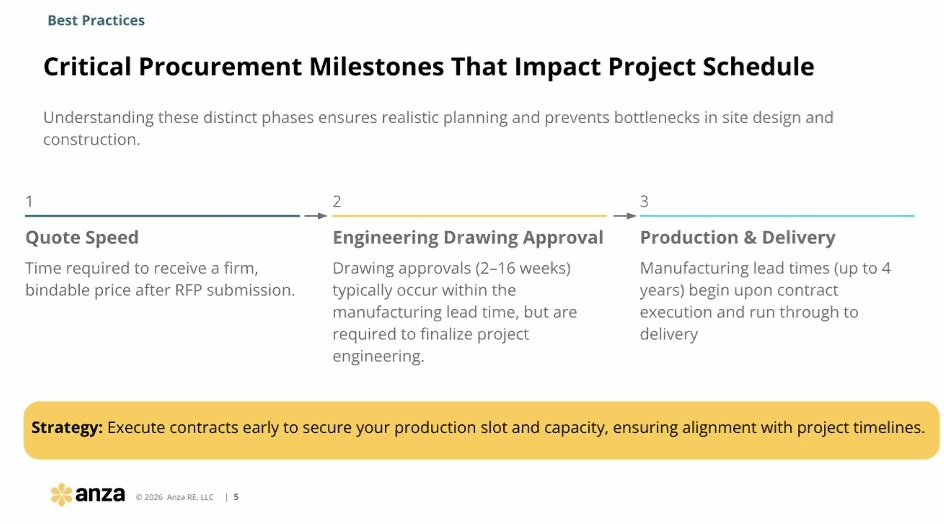
While the source article discusses how large developers use platforms like Anza to find suppliers, ProsperShield maintains long-standing, pre-negotiated relationships with multiple Tier 1 suppliers globally and domestically. This strategy ensures redundancy. If one supply line is constrained, we have immediate alternatives, minimizing the impact on your project schedule.
2. Strategic Inventory Management
We don't wait for components to be needed; we forecast demand and secure inventory well in advance. For key components that might be affected by the solar supply chain crunch, we maintain strategic inventory reserves, ensuring we can deliver on our installation timelines, regardless of momentary market fluctuations.
3. Expertise in Interconnection and Permitting
The transformer shortage often slows down the utility side of the process—the interconnection. Our dedicated team specializes in navigating the complex regulatory requirements of utilities across all 42 states we serve. We understand the specific rules related to new grid capacity and can submit highly accurate, complete interconnection applications, reducing the likelihood of costly bureaucratic delays.
4. Maximizing the Solar Investment Tax Credit (ITC)
Federal deadlines, like those related to the FEOC rules, often coincide with the looming deadlines for maximizing the federal solar Investment Tax Credit (ITC). The ITC allows homeowners to deduct a percentage of their solar installation cost from their federal taxes. Securing your contract and getting the installation underway quickly is essential to ensure you capture the maximum value of this credit.
Actionable Tip: If your installer cannot guarantee the timely delivery of all necessary components (including those related to utility interconnection), your savings timeline could be jeopardized. Always ask potential installers about their contingency plans for supply chain disruptions.
Beyond the Panels: A Holistic Approach to Home Energy Resilience
The challenges posed by the transformer shortage underscore a greater truth: reliance on an aging, stressed utility grid carries inherent risks. The best way for homeowners to mitigate these risks is to transition toward comprehensive home energy resilience.
Solar panels are the first step, but true independence comes from reducing demand and securing backup power.
1. Battery Storage: The Ultimate Grid Shield
When the grid is strained—whether due to a supply shortage delaying repairs or extreme weather—your home can be protected with battery storage. A home battery, like the Generac or Tesla Powerwall systems ProsperShield installs, stores the excess energy generated by your solar panels.
- Benefit: If a local transformer failure causes a neighborhood outage, your battery seamlessly powers essential appliances, ensuring continuity and reducing reliance on the stressed utility infrastructure.
2. Insulation and HVAC: Reducing the Load
Less demand on the grid means less stress on the transformers and lower energy bills for you. ProsperShield offers comprehensive home improvement services designed to boost energy efficiency before solar even goes on the roof.
- Insulation: Proper insulation (attic, walls, crawlspace) can reduce heating and cooling loss by up to 30%, drastically lowering your overall energy consumption.
- High-Efficiency HVAC: Upgrading to a modern, high-efficiency HVAC system ensures your home is comfortable without drawing excessive power, further reducing your reliance on the grid during peak times.
3. Roofing: A Foundation of Protection
Before installing solar, ensuring your roof is sound is paramount. ProsperShield integrates roofing assessments and replacements into the solar installation process. A new, energy-efficient roof provides a perfect foundation for solar, ensuring decades of worry-free performance.
To explore how ProsperShield handles everything from solar installation and battery storage to HVAC and roofing, Call us at 877-317-9079 today.
Actionable Steps: Securing Your Solar Project Now
The convergence of supply chain pressure, rising raw material costs, and strict federal deadlines (like the FEOC requirements) means that delays are becoming more common for those who wait. For homeowners, the message is clear: urgency is key.
Here are three practical steps to take right now to lock in your project and avoid future delays:
Step 1: Lock in Your Price and Equipment
Demand is high. Secure a contract with an established installer who can guarantee equipment availability and pricing. Ask for clarity on lead times for all major components, including panels, inverters, and any required utility-side upgrades.
Step 2: Prioritize Energy Efficiency First
Before sizing your solar system, look inward. Invest in insulation and high-efficiency appliances. By reducing your overall energy load, you may need fewer panels, which can simplify the permitting process and reduce the overall strain on the local grid infrastructure.
Step 3: Choose an Experienced, Established Partner
Smaller installers might struggle to navigate the complex procurement landscape or meet the stringent deadlines imposed by federal policies. Choose a national expert like ProsperShield, which has the scale and experience to manage these risks effectively. Our 24,000+ satisfied customers are a testament to our ability to deliver on time, even in challenging market conditions.
Ready to Calculate Your Savings?
Use our quick online tool to Calculate your savings based on your current energy usage and location. Understanding your potential ROI is the first step toward energy independence.
Conclusion: Navigating the Future of Home Energy
The solar revolution is unstoppable, but like any major infrastructure shift, it encounters bumps in the road—the transformer shortage being one of the most significant today. For homeowners, this is a moment to be informed, strategic, and proactive.
By choosing a partner like ProsperShield, you gain access to vetted supply chains, expert regulatory navigation, and a full suite of services designed for maximum home energy savings and resilience.
Don't let global bottlenecks stall your path to independence. Take control of your energy future today.
Schedule a free consultation with a ProsperShield specialist to start designing your resilient, energy-independent home.
Topics
Ready to Go Solar?
Get a free consultation and see how much you could save with ProsperShield solar.