
The 2026 Solar Shift: Why Lower Prices and Battery Storage Mean Bigger Home Savings
Global solar is changing, and it’s fantastic news for US homeowners! Discover how falling panel prices, mandatory battery storage, and a focus on quality installation are maximizing your home energy savings.
Energy Solutions Team
Home Energy Specialists
The 2026 Solar Shift: Why Lower Prices and Battery Storage Mean Bigger Home Savings
If you’ve been watching the home solar installation market, you might have noticed a lot of chatter lately about global shifts. While industry headlines often focus on manufacturing capacity and deployment rates, the real takeaway for you—the homeowner—is incredibly positive: solar energy is becoming more affordable, more reliable, and more essential than ever before.
At ProsperShield, we operate across 42 US states, and we’re seeing firsthand how these global trends are hitting the local residential market. The consensus is clear: we are entering a Golden Age for residential solar. Why? Because the market is adjusting, which means lower component costs for us, and a massive focus on quality system integration and energy storage for you.
This isn't just about putting panels on your roof anymore; it’s about future-proofing your home, maximizing your return on investment (ROI), and achieving true energy independence. Let’s dive into the major trends defining the solar landscape through 2026 and how you can take advantage of them right now.
1. The Great Price Reset: Why Solar Panels Are Getting Cheaper
For years, one of the biggest barriers to entry for homeowners considering solar was the initial investment cost. While federal and state incentives have always helped, the cost of the hardware itself is now dropping significantly, thanks to global market dynamics.
The Role of Global Supply and Demand
The source of this affordability boom lies primarily in manufacturing. Countries like China and India have rapidly expanded their solar panel manufacturing capacity. This massive, sustained build-out has resulted in a structural global surplus of photovoltaic (PV) modules. Simply put, there are more high-quality panels available than the world is currently installing.
What does a global surplus mean for your home?
- Lower Equipment Costs: When supply outstrips demand, prices fall. This downward pressure on pricing translates directly into lower overall system costs for residential installations here in the US. This makes the initial investment more accessible and accelerates your payback period.
- Increased Quality Competition: With panel costs becoming less of a differentiator, manufacturers are now competing on efficiency, durability, and warranty terms. This is excellent for consumers, as you get higher-performing technology for a lower price.
- Faster ROI: A lower initial investment combined with consistent energy savings means your time to break even—the point where your savings equal your installation cost—is shrinking.
This trend is a game-changer for solar savings. If you received a solar quote a few years ago and shelved it due to cost, now is the time to re-evaluate. The financial landscape has shifted dramatically in your favor.
Actionable Tip: Ready to see how much cheaper solar is today? Use our Calculate your savings tool to get a personalized estimate based on current equipment costs and federal incentives.
2. Energy Storage is No Longer Optional: The Rise of PV-Plus-Storage
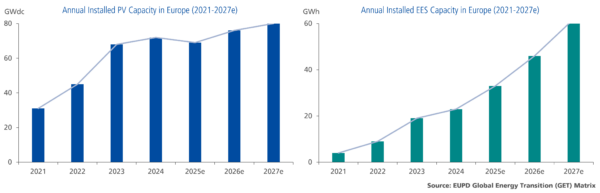
The most critical shift defining the solar market for 2026 and beyond is the move toward mandatory PV-plus-storage systems. Energy storage, primarily in the form of home battery backup, is rapidly transforming from a luxury add-on into an essential component of a resilient solar system.
Why Batteries Are Becoming Essential
As more homes and businesses adopt solar, the traditional electrical grid faces new challenges, including grid congestion and curtailment risk. When the sun is shining brightly, the grid can sometimes become overwhelmed by excess energy, forcing utilities to temporarily limit (or curtail) the output of solar systems.
For homeowners, this means lost potential savings. For the utility, it means instability. Batteries solve both problems simultaneously:
A. Home Resilience and Peace of Mind
In the U.S., severe weather events, wildfires, and aging infrastructure lead to frequent power outages. A battery system ensures your critical appliances (lights, refrigerators, medical equipment) stay running, providing true grid resilience.
B. Maximizing Financial Returns (Peak Shaving)
Many utilities are moving toward Time-of-Use (TOU) rates, where electricity costs significantly more during peak demand hours (often late afternoon/early evening). With a home battery, you can:
- Store Cheap Energy: Store the solar power generated during the day (when rates are low).
- Use Stored Energy During Peak: Automatically switch to battery power when utility rates spike, avoiding expensive electricity purchases.
This strategy, known as peak shaving, dramatically increases your monthly savings and maximizes your solar ROI.
The Policy Push for Storage
Regulators and utilities are increasingly recognizing that widespread battery adoption stabilizes the grid. In many markets, new incentive structures—and sometimes new grid requirements—are actively encouraging homeowners to include storage. This integration is no longer optional; it’s becoming the baseline for a high-performing system.
At ProsperShield, we specialize in seamless system integration, pairing high-efficiency solar panels with robust battery solutions from top manufacturers. We’ve completed over 24,000 installations, giving us the expertise to design a PV-plus-storage system that meets your specific energy needs and local utility requirements.
Don’t wait for the next blackout to think about backup power. Schedule a free consultation with our energy specialists to design your custom solar and battery solution today.
3. Quality Over Quantity: The Shift to Execution and Expertise
With panel prices stabilizing globally, the competitive edge in the residential solar market is shifting away from who can offer the cheapest component and toward who can execute the best installation.
As the industry matures, the focus is intensely centered on execution quality, system reliability, and long-term customer support. For homeowners, this is vital, as a poor installation can negate all the potential savings from cheaper panels.
How to Vet a Quality Solar Installer
In a highly competitive market, homeowners must look beyond the lowest sticker price and focus on the installer’s track record, certifications, and comprehensive service offerings. Here are the three non-negotiable questions to ask any potential partner:
A. Do they offer comprehensive system integration?
The market demands more than just solar. A truly expert provider understands the entire home energy envelope. This includes integrating solar with HVAC systems, insulation, and robust roofing solutions to ensure maximum energy efficiency before the panels even go up. If your installer only does panels, they are missing half the equation for total home savings.
B. What is their track record and coverage?
Longevity and scale matter. A company that has successfully navigated regional policy differences and maintained high standards across multiple states is a safer bet. ProsperShield’s operation across 42 US states and our history of 24,000+ installations demonstrate our commitment to scalable quality and deep industry knowledge.
C. Do they handle policy alignment and permitting?
U.S. installations are complex, shaped by incentive eligibility (like the Federal Investment Tax Credit, or ITC), trade enforcement rules, and increasingly stringent local permitting timelines. A top-tier installer acts as your policy expert, ensuring your system is designed and installed to maximize every available financial opportunity and adhere to all local codes, avoiding costly delays.
The ProsperShield Advantage: A Holistic Approach
We believe that a truly efficient home starts with the foundation, not just the roof. Our expertise extends beyond solar and battery storage to include essential home improvements like:
- High-Efficiency HVAC systems: Ensuring your heating and cooling demands are minimized.
- Advanced Insulation: Keeping conditioned air inside where it belongs.
- Durable Roofing: Providing a solid foundation for your 25+ year solar investment.
By addressing the whole home, we guarantee that the solar power you generate is used as efficiently as possible, dramatically increasing your residential solar ROI.
4. Navigating Regional Divergence: Why Local Expertise Matters More Than Ever
The global solar market may be stabilizing, but within the United States, deployment activity is highly regional. Success depends heavily on navigating specific state incentives, utility rate structures, and permitting complexities.
Policy Drives US Solar Adoption
While some global markets are seeing declining installation rates due to cooling demand and higher borrowing costs, the U.S. market remains robust, largely due to strong policy support.
- The Federal Investment Tax Credit (ITC): This credit allows homeowners to deduct a significant percentage of the cost of installing a solar energy system from their federal taxes, making the investment highly attractive.
- State and Local Incentives: Net metering policies, Solar Renewable Energy Credits (SRECs), and local rebates vary wildly by state. For instance, the rules governing how you get compensated for excess energy in California are very different from those in Texas or Florida.
The Importance of a 42-State Footprint
For homeowners, this regional divergence means you need an installer who doesn't just know solar, but knows your state’s specific regulations. An installer operating across a wide footprint, like ProsperShield, has the institutional knowledge to ensure you qualify for every available incentive, regardless of whether you live in a booming solar state or an emerging market.
This expertise is crucial for reducing permitting delays—a major pain point in some regions—and ensuring your system is commissioned quickly and correctly.
Interested in understanding the specific incentives available in your area? Explore our solar services and learn how our local teams maximize your financial benefits.
5. Future-Proofing Your Home Energy Strategy
The trends leading into 2026—lower equipment costs, the mandate for battery storage, and the demand for high-quality execution—create a unique window of opportunity for homeowners.
This isn't just about saving money next month; it’s about establishing long-term energy cost predictability and securing your home against rising utility rates and grid instability.
Practical Steps to Maximize Your Solar Investment
- Prioritize Efficiency First: Before installing solar, ensure your home is energy-tight. Ask your installer about HVAC and insulation upgrades. Less wasted energy means you need a smaller, less expensive solar system.
- Insist on Storage: Even if your current utility rates don't mandate a battery, installing one now future-proofs your system against inevitable changes in TOU rates and provides invaluable resilience.
- Choose Integrated Service: Partner with a provider like ProsperShield that handles everything—from roofing and permits to financing and long-term maintenance. This single-point-of-contact approach guarantees accountability and seamless integration.
Summary: Act Now to Lock in 2026 Savings
The global solar market adjustment is translating directly into consumer benefits here in the United States. Lower panel prices make the initial investment more attractive, while the increasing necessity of energy storage guarantees greater system reliability and financial returns through peak shaving and resilience.
ProsperShield is positioned to deliver on this promise of quality and integration. With over 24,000 installations completed across 42 states, we are committed to providing homeowners with the expertise needed to navigate this complex, yet highly rewarding, energy transition.
Ready to capitalize on the lower costs and advanced technology defining the 2026 solar market?
Call us at 877-317-9079 or visit our website at prospershield.io to start your journey toward energy independence. We look forward to helping you achieve maximum savings and peace of mind.
Topics
Ready to Go Solar?
Get a free consultation and see how much you could save with ProsperShield solar.