
Home Solar Panel Trends 2026: Why Quality & Storage Define Savings
The solar market is changing fast! Learn how falling equipment prices and the rise of PV-plus-storage systems are creating massive opportunities for homeowners seeking energy independence in 2026.
Craig Stratton
Founder & CEO, ProsperShield
The New Era of Solar: Why 2026 is the Year to Prioritize Quality and Storage
If you’ve been watching the solar industry over the last few years, you’ve witnessed an incredible boom. Solar panels have moved from a niche technology to a mainstream home improvement, driven by falling costs, powerful federal incentives, and a growing desire for energy independence.
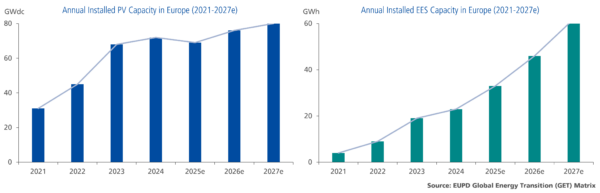
But the market is shifting. Industry reports confirm that while global solar deployment remains strong, the period of frantic, volume-driven growth is settling into a phase of maturity and adjustment. For homeowners across the 42 states ProsperShield serves, this isn’t a sign of slowdown—it’s actually a huge opportunity. The Home Solar Panel Trends 2026 point toward lower equipment prices and a critical new focus on system quality and integration, especially the pairing of solar photovoltaic (PV) systems with battery energy storage.
In short: Going solar is becoming more affordable, but choosing how you go solar—and who you choose to install it—is more important than ever.
As expert content writers for ProsperShield, a company that has managed over 24,000 installations, we want to break down these complex industry shifts into practical, actionable advice that puts money back in your pocket and power back in your hands.
Trend 1: The Great Price Adjustment—Lower Costs for Premium Equipment
One of the most significant dynamics shaping the 2026 solar landscape is the shift in manufacturing capacity. For years, demand often strained supply. Now, due to massive capacity build-outs overseas, the global market is experiencing structural oversupply. While this creates intense competition among manufacturers, it translates to excellent news for homeowners: sustained downward pressure on equipment pricing.
What Falling Costs Mean for Homeowners
Historically, solar shoppers were often forced to choose between affordability and quality. Today, you can access top-tier, high-efficiency panels and advanced inverters at prices that were unheard of just a few years ago. This doesn’t mean you should chase the lowest possible bid, but it does mean that the upfront investment in a robust, high-performing system is more accessible than ever.
Actionable Tip: When reviewing quotes, look beyond the total system price. Focus on the Cost per Watt and the Equipment Tier. A slightly higher initial investment in premium panels (which often come with longer, more comprehensive warranties) will almost always yield better long-term performance and higher ROI.
ProsperShield Insight: We’ve built our reputation on selecting components that offer the best balance of efficiency and reliability. Our buying power, backed by 24,000+ installations, ensures our customers benefit directly from these favorable market conditions without sacrificing quality.
Trend 2: PV-Plus-Storage is No Longer Optional—It’s Essential
If there is one defining factor of the modern solar system, it is the integration of battery energy storage. Industry data confirms that across the U.S., grid congestion, increasing curtailment risk (where the utility prevents you from exporting power), and volatile pricing are making energy storage mandatory for project viability, even at the residential level. This shift is driving a massive increase in residential battery storage adoption.
Why Battery Storage is Dominating Home Solar Panel Trends 2026
Battery storage used to be primarily about backup power during an outage. While resilience remains a critical benefit, the financial arguments for pairing solar panels with storage are now overwhelming:
1. Maximizing Self-Consumption and Avoiding Curtailment
In many mature solar markets, Net Metering policies are changing. Utilities are reducing the rate they pay for exported solar power, or in some extreme cases, capping the amount you can send back to the grid. A battery solves this problem by storing excess energy generated during the sunny peak of the day. Instead of exporting power for pennies, you store it and use it yourself later when electricity rates are highest.
2. Mastering Time-of-Use (TOU) Rates
Many utilities now implement Time-of-Use (TOU) billing, where electricity prices skyrocket during peak evening hours (typically 4 PM to 9 PM). Without a battery, you are forced to buy expensive grid power during this time.
With a PV-plus-storage system, your battery automatically discharges during the peak TOU window, allowing you to power your home with free, stored solar energy. This strategy alone can drastically reduce your monthly utility bill.
3. Enhancing Grid Resilience and Energy Security
Severe weather events and aging infrastructure continue to make power outages a common reality across the U.S. A high-quality battery system, like those integrated by ProsperShield, provides seamless, automatic backup power for essential loads (lights, refrigeration, medical equipment) when the grid fails. This peace of mind is invaluable.
How to Plan Your Perfect PV-Plus-Storage System
Planning for storage requires expert consultation. You need to assess your daily energy usage, your essential backup needs, and your local utility’s rate structure.
Critical Questions to Ask Your Installer:
- How many hours of backup power will the battery provide for my essential circuits?
- Is the battery system scalable if my energy needs increase later?
- Does the system integrate software that optimizes charging and discharging based on my utility’s TOU rates?
If you are ready to explore the immense savings and security offered by modern residential battery storage, the time to act is now. We make the process simple and transparent. Schedule a free consultation with a ProsperShield energy specialist today to determine the ideal PV-plus-storage setup for your home.
Trend 3: Execution Quality, Policy Alignment, and System Integration are Key
As equipment prices normalize, competition among solar companies shifts away from sheer volume installation toward superior execution, deep policy knowledge, and comprehensive system integration. This is perhaps the most crucial takeaway for homeowners.
In a mature market, the difference between a successful, high-performing system and a problematic one often lies in the quality of the installation and the installer's ability to handle complex permitting and utility interconnection rules.
Why Your Installer’s Experience Matters More Than Ever
The source article highlights that success in 2026 relies on strong EPC (Engineering, Procurement, and Construction) partnerships—meaning homeowners must choose established companies with proven track records.
A. Mastering Complex Permitting
Permitting timelines and regulations are increasingly complex and localized. An inexperienced installer can leave your project stalled for months. ProsperShield, operating across 42 states with thousands of successful deployments, has the necessary expertise to navigate diverse municipal requirements efficiently, ensuring a faster path to activation.
B. Seamless System Integration
Solar is no longer a standalone product; it’s part of a comprehensive home energy solution. The best installers are those who can look at your home holistically. If your roof is old, your solar investment is at risk. If your HVAC system is inefficient, you'll need more solar panels than necessary.
ProsperShield offers a full suite of services designed for total home efficiency:
- Roofing: Ensuring a perfect, leak-proof foundation for your panels.
- HVAC: Upgrading to high-efficiency heating and cooling to lower your baseline energy consumption.
- Insulation: Maximizing thermal performance so you waste less of the energy your solar system generates.
By addressing the entire envelope of your home, we ensure your solar investment is optimized for maximum savings. To learn more about how we integrate solar with roofing, HVAC, and insulation, Explore our solar services.
C. Financial and Warranty Security
When you invest in a system designed to last 25+ years, you need confidence that your installer will be around to honor the warranties. The shift in market competition means some smaller, less stable firms may struggle. Choosing an established provider like ProsperShield (with 24,000+ installations under our belt) provides peace of mind and long-term support.
Actionable Strategies for Homeowners to Maximize ROI in 2026
Capitalizing on the favorable market conditions and the rise of advanced PV-plus-storage requires a strategic approach. Here are the steps ProsperShield recommends for every homeowner considering solar this year.
1. Leverage Federal and State Incentives
The federal Investment Tax Credit (ITC) remains the single most powerful incentive, allowing homeowners to claim a significant percentage of the total solar and storage system cost as a tax credit. This incentive is scheduled to remain strong, but state-level incentives, rebates, and local policy structures are constantly changing. Work with an installer who actively tracks these policies to ensure you don't miss out.
2. Prioritize Energy Efficiency First
Before you size your solar system, make your home as efficient as possible. Every dollar spent on insulation or a high-efficiency HVAC system will save you far more than that same dollar spent on an extra solar panel.
ProsperShield Tip: Ask about an energy audit. Understanding where your home leaks energy—from the attic (insulation) to the cooling unit (HVAC)—is the first step toward true energy independence. A smaller, optimized solar system is always better than an oversized system compensating for massive waste.
3. Calculate True Long-Term Savings
Don't just look at the monthly payment; calculate your long-term savings and the increase in home value. Solar is often treated as a liability, but it is one of the few home improvements that provides an immediate positive cash flow and significantly boosts appraisal value.
Want a quick estimate of your potential savings? Use our interactive tool: Calculate your savings.
4. Understand Financing Options
With rising interest rates being a factor in broader market stabilization, securing favorable financing is key. Many solar installers, including ProsperShield, offer specialized solar financing products that often result in a lower monthly combined payment (solar loan + reduced utility bill) than your previous electric bill alone. Explore our resources on solar financing to understand the best options available to you.
5. Demand Comprehensive Service
In this new market focused on execution, demand comprehensive service from the initial consultation to final inspection. This includes:
- Detailed shade analysis and system design.
- Clear communication throughout the permitting process.
- High-quality components (panels, inverters, batteries).
- Robust post-installation monitoring and support.
The ProsperShield Advantage in a Changing Market
The solar industry is maturing, and this shift benefits the informed homeowner. You now have access to better technology at lower costs, but the complexity of integration and the importance of quality installation have never been higher.
This is where ProsperShield shines. Our extensive experience across 42 US states and our commitment to holistic home improvement (solar, storage, roofing, HVAC, insulation) mean we are perfectly positioned to deliver the high-quality, integrated solutions that define success in 2026 and beyond.
We don't just put panels on your roof; we engineer your complete energy future.
Ready to capitalize on the current Home Solar Panel Trends 2026 and achieve true energy independence? Start the conversation with our experts today.
Call us at 877-317-9079 or visit our contact page to connect with a local specialist.
Topics
Ready to Go Solar?
Get a free consultation and see how much you could save with ProsperShield solar.