
Why Solar Panel Prices Are Dropping & Why Storage is Essential Now
Global solar trends mean lower panel costs for homeowners, but the focus has shifted to quality and battery integration. Learn how to maximize your savings and home energy resilience in 2024 and beyond.
Craig Stratton
Founder & CEO, ProsperShield
The New Energy Landscape: Why Now is the Best Time to Go Solar
If you've been watching the solar industry, you might have noticed some fascinating shifts happening globally. For years, the conversation centered purely on explosive growth and capacity expansion. While the solar industry is still expanding, the market is maturing, and that maturity is translating directly into significant benefits for homeowners like you.
In short: Solar panel prices are dropping, but the rules of the game have changed.
ProsperShield operates across 42 US states, and we’ve seen these global trends redefine what a successful home solar installation looks like. It’s no longer just about slapping panels on the roof; it’s about strategic system integration, maximizing savings, and—most importantly—building true energy resilience. The biggest takeaway? Energy storage, or solar battery systems, are rapidly becoming essential, not optional.
Let’s dive into what these global shifts mean for your home, your wallet, and your future energy independence.
The Great Solar Price Adjustment: Good News for Your Budget
The primary driver of lower solar panel prices is a global phenomenon: oversupply. Massive manufacturing capacity build-outs, particularly in Asia, have resulted in more photovoltaic (PV) modules being produced than the market can immediately absorb. This structural surplus is driving down the cost of the physical hardware.
For the American homeowner, this is excellent news. It means the barrier to entry for clean energy is lower than ever before.
What Lower Hardware Costs Mean for Homeowners:
- Reduced Upfront Investment: While installation and permitting costs remain, the overall material cost of a solar system is decreasing, improving your initial return on investment (ROI).
- Faster Payback Period: When the initial investment drops, the time it takes for your solar savings to cover the system cost shrinks, leading to quicker profitability.
- Opportunity to Invest in Quality: With savings on panels, homeowners can allocate budget toward high-efficiency components, robust installation quality, or, critically, home energy storage.
However, this affordability comes with a caveat. When the price of the commodity (the panel) drops, the value shifts entirely to the quality of the service, design, and execution. Choosing a high-volume, low-quality installer just because their panel price is the lowest can be a costly mistake down the road.
The Shift to Execution Quality and System Integration
As hardware costs stabilize, competition in the US market is no longer defined by who can sell the cheapest panel, but by who can deliver the best system integration. Homeowners need partners who understand complex permitting timelines, local utility regulations, and the intricacies of connecting solar, storage, and existing home infrastructure (like HVAC and roofing).
This is where ProsperShield's expertise shines. With over 24,000 installations completed, our focus is always on delivering a seamless, high-quality, whole-home solution that lasts decades, not just a cheap product.
Actionable Tip: When comparing solar quotes, look beyond the “per-watt” price of the panel itself. Ask about the installer’s experience with local permitting, their warranty coverage (for labor and components), and their ability to integrate battery storage seamlessly. Quality execution is the new premium.
The Essential Power Couple: Why PV + Storage is Non-Negotiable
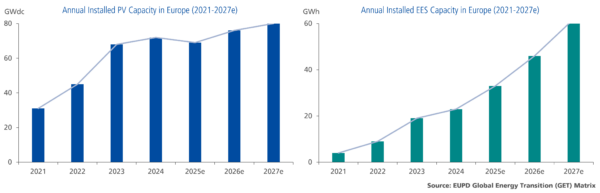
If the global market trends tell us one thing, it's this: energy storage is moving from a luxury upgrade to a foundational component of modern solar.
Why the urgency? As more homes and businesses adopt solar (the US market is still estimated to add nearly 50 GW of solar in 2024), local electrical grids face increasing strain. This strain, combined with shifting utility policies, means relying solely on net metering is becoming riskier, and having dedicated home storage is becoming vital for maximizing savings and ensuring resilience.
1. Conquering Time-of-Use (TOU) Rates
Many utilities are shifting away from simple flat-rate billing toward Time-of-Use (TOU) rates. This means the electricity you pull from the grid costs significantly more during peak hours (typically late afternoon/early evening, 4 PM to 9 PM) than during the day or overnight.
The Problem: Your solar panels produce peak energy midday, but your home uses peak energy (cooking, AC running high, charging EVs) during the expensive TOU window.
The Solution (Storage): A solar battery system allows you to store the cheap, clean power generated midday and automatically discharge it during the expensive evening peak. This effectively allows you to bypass the utility’s highest rates, securing your financial savings and greatly enhancing your overall ROI.
2. Ensuring Grid Resilience and Backup Power
Recent years have highlighted the fragility of aging electrical infrastructure, exacerbated by extreme weather events. Whether it’s planned outages (like Public Safety Power Shutoffs, or PSPS) or unexpected blackouts, maintaining power is a major concern for homeowners.
Solar panels alone often shut off when the grid goes down for safety reasons. A battery, however, acts as an island. It detects the outage and instantly switches your home to its stored power supply, keeping essential circuits—or even your entire home—running until the grid is restored.
3. Mitigating Curtailment Risk
In areas with high solar saturation, utilities sometimes have to limit the amount of power solar systems can feed back into the grid, a process known as curtailment. This is essentially wasted energy that you generated but can't use or sell.
Storage eliminates this risk. Instead of being forced to send excess electricity to an overloaded grid, your battery captures that power, ensuring every kilowatt-hour your panels produce is utilized by your home, maximizing the efficiency and profitability of your system.
Designing Your Whole-Home Energy Ecosystem
The shift in the solar market toward system integration aligns perfectly with ProsperShield's core philosophy: energy independence requires a holistic approach. Solar and storage are powerful, but their efficiency is multiplied exponentially when paired with other critical home improvements.
We don't just install solar; we assess your entire home energy consumption profile. A truly efficient home means minimizing the energy you need to buy, maximizing the energy you generate, and storing the excess.
The ProsperShield Whole-Home Advantage
A. HVAC System Upgrades
Heating and cooling typically account for the largest portion of a home's energy bill. Installing solar without addressing an old, inefficient HVAC system is like trying to fill a leaky bucket. We offer modern, high-efficiency HVAC replacements that drastically reduce your baseline energy demand, meaning you need fewer solar panels to cover your remaining usage.
B. Insulation and Weatherization
Proper insulation (attic, walls, crawlspaces) and air sealing are the first line of defense against energy loss. By ensuring your home is properly sealed, the power generated by your solar panels and stored in your battery goes toward running appliances, not fighting uncontrolled temperature leaks.
C. Roofing Integrity
Solar panels are a 25+ year investment. Installing them on an aging roof is risky. ProsperShield often integrates high-quality roofing replacement into the solar project, ensuring the foundation of your system is sound and maximizing the longevity of your investment. This bundled approach simplifies financing and guarantees a single point of accountability for the entire system.
We believe in providing value beyond the panel. If you are ready to explore a comprehensive, integrated solution that includes solar, battery storage, and essential home efficiency upgrades like HVAC and roofing, we are here to help.
Schedule a free consultation with a ProsperShield energy expert today. We serve homeowners across 42 states and specialize in designing systems built for resilience and maximum long-term savings.
Navigating Policy and Incentives in a Maturing Market
While global dynamics are pushing hardware prices down, national and state policies continue to provide crucial financial stability for US homeowners adopting solar and storage.
The Inflation Reduction Act (IRA)
The federal Investment Tax Credit (ITC), solidified by the IRA, remains the single most important financial incentive. This credit allows homeowners to deduct 30% of the total cost of their solar and storage installation from their federal tax liability. This massive incentive significantly offsets the cost of the system, including the often higher cost of battery storage.
State and Local Incentives
Depending on your location within our 42-state service area, you may qualify for additional benefits, such as:
- State Tax Credits or Rebates: Direct financial aid or tax reductions.
- Performance-Based Incentives (PBIs): Payments based on the energy your system produces.
- Property Tax Exemptions: Excluding the value added by solar from property tax assessments.
Why Policy Alignment Matters More Than Ever
As the solar market matures, incentive eligibility, permitting timelines, and utility rules are becoming more complex and region-specific. This is exactly why partnering with an experienced, large-scale installer like ProsperShield is critical. We stay ahead of the policy curve, ensuring your system design maximizes every available incentive and complies fully with local regulations.
Expert Insight: The US solar market is estimated to install around 48 GW of capacity this year, showing robust growth, but the installation process is increasingly shaped by regulatory compliance. Don't risk your investment by working with an inexperienced installer who might miss crucial incentive deadlines or regulatory requirements.
Practical Steps: How to Leverage the New Solar Economy
With panel costs falling and storage becoming essential, the decision to go solar is more financially sound than ever. Here are your actionable steps to capitalize on these market dynamics:
1. Prioritize an Integrated Battery System
Do not view storage as a separate purchase. Design your solar system with battery backup from day one. This ensures optimal integration, maximizes the 30% federal tax credit (which applies to the battery), and guarantees you are protected from rising TOU rates and grid instability.
2. Get a Full Home Energy Audit
Before sizing your system, understand where your energy is actually going. A ProsperShield consultant can perform a detailed assessment, often recommending minor efficiency tweaks (like insulation or HVAC maintenance) that can reduce your overall solar requirements, saving you money on hardware.
3. Demand Quality and Experience
In a market defined by oversupply, quality execution is the differentiator. Ask potential installers:
- What is your experience with PV-plus-storage systems?
- How do you handle permitting and interconnection applications in my specific county?
- What is your labor warranty, and how long have you been in business?
Choose an established company like ProsperShield, which has the scale (42 states) and experience (24,000+ installations) to guarantee long-term performance and stability.
4. Explore Financing Options
Many homeowners assume they need cash upfront. Today's solar financing options—including solar loans and leases—allow you to start saving immediately, often with a monthly payment that is lower than your current utility bill. Lower hardware costs only make these financing options more attractive.
Ready to see how much you can save by integrating solar, storage, and home efficiency? Use our online tool to get an immediate estimate. Calculate your savings or Call us at 877-317-9079 to speak directly with an energy specialist.
Conclusion: The Future is Integrated and Resilient
The global solar market is maturing, and that’s a fantastic development for US homeowners. Lower solar panel prices make the investment more accessible, while the increasing necessity of energy storage guarantees long-term energy independence and protection from volatile utility rates and grid failures.
ProsperShield is committed to helping homeowners across the country navigate this new, integrated energy landscape. We provide the expertise in solar, battery storage, HVAC, insulation, and roofing necessary to build a truly resilient, high-performing home energy ecosystem. Don't settle for just panels; invest in a complete, quality-driven solution that will prosper for decades.
Topics
Ready to Go Solar?
Get a free consultation and see how much you could save with ProsperShield solar.