
Why Solar Installation Delays Are Rising & How to Lock In Savings Now
Industry supply chain issues and federal deadlines are slowing down solar installations nationwide. Learn why timing is critical and how ProsperShield guarantees timely project completion.
Craig Stratton
Founder & CEO, ProsperShield
The Unseen Hero: Why Supply Chain Bottlenecks Affect Your Residential Solar Installation Delays
If you’ve been considering solar panels for your home, you’ve likely noticed a few things: the technology is getting better, the savings potential is huge, and the federal incentives are still strong. But behind the scenes, a quiet storm is brewing in the energy supply chain that could dramatically impact the speed and cost of your solar installation.
At ProsperShield, we believe homeowners deserve complete transparency. While we have the robust procurement strategies necessary to shield our customers from these market pressures, it’s crucial for you to understand the current landscape. Right now, the solar industry—from massive utility-scale farms down to the neighborhood grid—is grappling with significant shortages, particularly involving a critical, often-overlooked component: the transformer.
This isn't just about a few missing parts; it’s a systemic issue driven by raw material scarcity, geopolitical tensions, and new regulatory deadlines. The result? Increased solar installation delays and rising component costs across the board.
We’re going to pull back the curtain on this complex issue, explain why acting quickly is essential for homeowners in our 42 service states, and show you exactly how ProsperShield minimizes risk to ensure your project stays on schedule and budget.
Understanding the Great Transformer Shortage
When you think of solar power, you usually picture sleek panels on your roof. But for that power to be usable—whether by your washing machine or the neighborhood grid—it has to be converted and regulated. That’s the job of transformers, which are vital components in almost every part of the energy ecosystem, from your home’s inverter to the utility substation down the street.
Why Are These Components So Hard to Get?
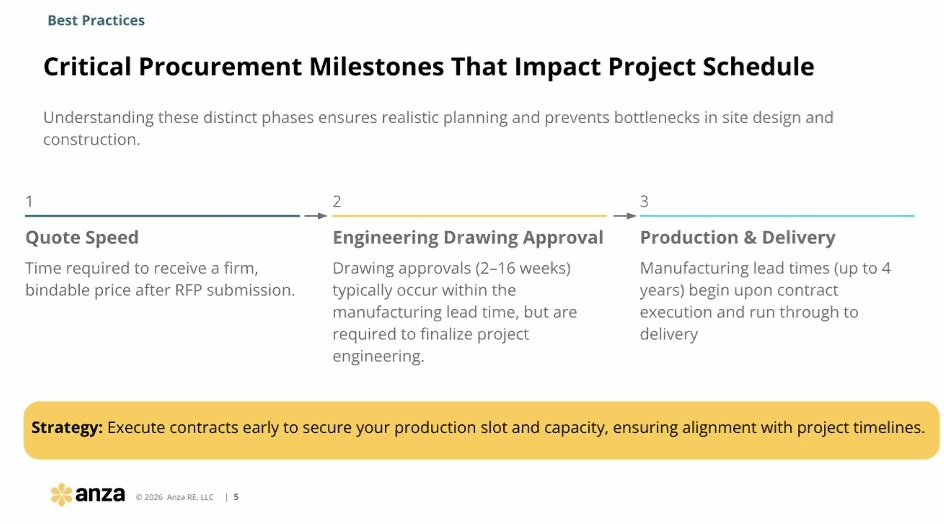
The current shortage isn’t a sudden event; it’s the culmination of several years of global economic pressure. The National Renewable Energy Lab (NREL) has identified several major drivers for the long-term demand and shortage of distribution transformers, which directly impact how quickly utilities can upgrade their local grids to handle increased solar capacity.
1. Raw Material Constraints and Price Spikes
Transformers require specialized materials, most notably grain-oriented electrical steel (GOES) and copper. The global supply of GOES has been tight for years, and geopolitical factors have further constrained supply, driving prices sky-high. When the core components of essential equipment become scarce and expensive, those costs inevitably trickle down the supply chain.
2. Pandemic Backlogs and Labor Shortages
Like many industries, manufacturing lagged significantly during and immediately after the pandemic. Factories accumulated massive backlogs that are still being cleared. Simultaneously, finding the specialized labor required to manufacture these complex, high-voltage components remains a challenge.
3. Increased Demand (The Solar Boom)
Paradoxically, the success of solar energy is contributing to the shortage. As more homeowners and businesses adopt solar, the demand for equipment—both residential components and the utility infrastructure needed to support them—has skyrocketed. Utilities are struggling to procure the necessary distribution transformers to modernize their aging grids, creating grid interconnection delays for solar projects.
If your local utility cannot get the necessary equipment to safely connect your solar system to the grid, your installation project can be indefinitely delayed, even if your panels and inverter are sitting ready in your garage.
The Regulatory Rush: Federal Compliance Deadlines
Adding complexity to the supply chain crunch are new federal policies designed to strengthen domestic manufacturing and address supply dependencies on foreign entities. These regulations, while aimed at long-term energy security, are creating an immediate, intense competition for components that meet specific compliance deadlines, often referred to as 'Safe Harbor' rules.
In essence, the industry is racing against the clock to secure compliant equipment before rigid deadlines kick in over the next few years. This race significantly impacts pricing and availability, particularly for components that have historically been imported.
- The Problem for Developers: Since 2019, imports have accounted for a significant portion of the U.S. power and distribution transformer supply. Now, developers must quickly pivot to domestic or compliant international suppliers, which are already overwhelmed.
- The Impact on Homeowners: This intense industry-wide procurement scramble means that installers who don't have established, secure supply channels will face longer lead times and higher costs, which they must pass on to the customer. Securing a contract now, before the full effect of the 2026 deadlines hits component pricing, is a smart defensive move.
ProsperShield's Advantage: Shielding Homeowners from Supply Chain Turbulence
So, what does all this high-level supply chain talk mean for you, the homeowner? It means choosing your installation partner is more critical than ever.
At ProsperShield, we don't just wait for components to become available. We actively manage our supply chain to ensure project continuity, minimizing the risk of solar installation delays that plague less experienced firms.
1. Strategic Procurement and Volume Buying Power
With over 24,000 installations completed across 42 US states, ProsperShield operates at a scale that gives us significant leverage. We work directly with top-tier manufacturers and procurement platforms, securing bulk orders well in advance. This volume buying power allows us to:
- Lock in Pricing: We secure component pricing months ahead of time, insulating our customers from sudden market fluctuations caused by raw material spikes or regulatory rushes.
- Guaranteed Inventory: We maintain a steady inventory of high-efficiency solar panels, advanced battery storage units, and critical balance-of-system components (like inverters and wiring) that meet or exceed compliance standards.
- Prioritized Delivery: Our established relationships ensure that when supply tightens, our projects remain prioritized.
2. Expertise in Interconnection and Permitting
One of the most common causes of residential solar delays isn't the physical installation—it's the bureaucratic process of permitting and utility interconnection. This process is becoming even slower as utilities struggle with their own transformer shortages.
Our dedicated engineering and permitting teams specialize in navigating complex local regulations and utility queues. We understand the specific requirements across our vast service area, ensuring that once your system is installed, the process of getting permission to operate (PTO) is as smooth and quick as possible.
Actionable Tip: When interviewing solar companies, always ask about their average time from contract signing to PTO, and specifically ask how they handle potential utility-side delays related to distribution transformer availability. If they don't have a clear answer, that's a major red flag.
If you want to bypass the waiting game and work with a proven leader in residential energy solutions, we handle the heavy lifting of procurement and compliance.
Ready to see how fast and affordable solar can be when you work with the best in the business?
Schedule a free consultation with a ProsperShield expert today.
Time is Money: Why Homeowners Must Act Quickly
The convergence of supply chain shortages and regulatory deadlines means that the window of opportunity to secure current pricing and avoid potential future delays is closing rapidly. For homeowners, acting now offers three immediate benefits:
1. Maximize the Federal Solar Investment Tax Credit (ITC)
The most significant financial incentive for going solar is the ITC, which currently provides a substantial percentage of the system cost back as a tax credit. While the ITC is scheduled to remain strong for the near future, regulatory timelines often shift, and the value of the credit won't last forever. Locking in your system design and contract now ensures you qualify under the current, robust structure.
2. Lock in Current Component Pricing
As manufacturers scramble to meet new compliance rules and raw material costs continue to fluctuate, industry analysts predict further upward pressure on component pricing through 2025 and 2026. By committing to your project today, you secure your price and insulate yourself from these future increases. Delaying your decision for six months could mean paying thousands more for the exact same system.
3. Beat the Grid Congestion Queue
As more homes adopt solar and utilities slow down infrastructure upgrades due to transformer shortages, interconnection application queues are growing longer. The sooner you submit your application (which ProsperShield handles for you), the sooner your place in the queue is secured. Don't wait until your neighborhood grid is completely saturated or your utility announces a moratorium on new interconnections.
Calculate Your True Savings Potential
It’s easy to get caught up in the technical details, but the bottom line is your family’s financial resilience. Going solar isn't just an environmental choice; it's a guaranteed way to hedge against rising utility rates.
Use our simple tool to estimate your personalized savings:
Calculate your savings and discover how quickly your ProsperShield system will pay for itself.
Beyond Solar: Building Complete Home Energy Resilience
At ProsperShield, our expertise extends far beyond just solar panels. We understand that true energy independence means addressing the entire home envelope. When the grid faces stress—whether from high demand, severe weather, or infrastructure shortages—a complete, resilient system is your best defense.
Battery Storage: Your Shield Against Grid Uncertainty
If the grid is struggling due to transformer shortages or utility outages, a home battery storage system becomes invaluable. Battery storage allows you to:
- Store Excess Power: Capture solar energy generated during the day.
- Maintain Power During Outages: Keep essential circuits running when the grid goes down.
- Optimize Usage: Draw power from the battery during peak utility rate hours, maximizing savings.
Integrating solar with a battery is the definitive step toward mitigating risks associated with grid instability and potential local solar installation delays caused by utility infrastructure issues.
The Whole Home Approach: HVAC, Insulation, and Roofing
Before maximizing energy production, we help our customers minimize energy waste. Our comprehensive suite of home improvement services ensures your house is running as efficiently as possible:
- High-Efficiency HVAC: Upgrading your heating and cooling systems is the fastest way to reduce your energy baseline, meaning you need a smaller, less expensive solar system to meet your needs.
- Advanced Insulation: Proper insulation keeps conditioned air in, reducing the strain on your HVAC and lowering your overall electric consumption.
- Roofing: We ensure your roof is in optimal condition before installing solar, providing a long-term, integrated solution that protects your investment.
By addressing roofing, insulation, and HVAC alongside solar and battery storage, ProsperShield offers a truly holistic path to energy independence.
Explore our solar services and learn how we provide comprehensive solutions, not just components.
Final Takeaway: Expertise Matters More Than Ever
In an era defined by supply chain volatility and complex federal regulations, the success of your solar project hinges entirely on the expertise and stability of your installer.
ProsperShield has the scale, experience, and strategic procurement partnerships to navigate these industry headwinds, ensuring timely installation and guaranteed performance for homeowners across 42 US states.
Don't let abstract industry shortages become concrete delays for your family. If you’ve been waiting for the right time to go solar, that time is now.
Protect your home's energy future and lock in today's prices and incentives.
Call us at 877-317-9079 to speak with a non-commissioned energy consultant and start your journey toward energy independence today. We look forward to helping you prosper!
Topics
Ready to Go Solar?
Get a free consultation and see how much you could save with ProsperShield solar.