
Why Solar Panel Prices Are Dropping & How Homeowners Win Big
The global solar market is shifting, creating massive opportunities for US homeowners. Learn why solar panel prices are falling, and why adding battery storage is now non-negotiable for maximum savings and resilience.
ProsperShield Team
Solar Energy Experts
The Great Solar Reset: Why Now Is the Best Time to Invest in Home Energy
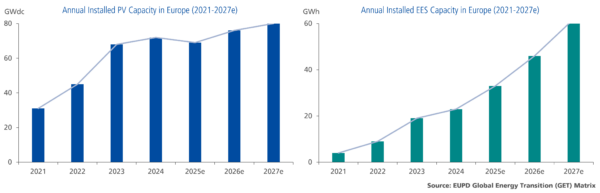
If you’ve been watching the solar industry, you’ve probably noticed two conflicting headlines recently: On one hand, global solar installations are stabilizing after years of explosive growth. On the other hand, solar panel prices are dropping significantly, making the technology more affordable than ever for homeowners.
What gives? Are these changes a sign of trouble, or a massive opportunity?
As experts serving homeowners across 42 US states, ProsperShield is here to tell you: This is the best time in history for homeowners to go solar.
The industry is undergoing a “Great Solar Reset.” This shift isn't about slowing down; it's about maturing. The focus is moving away from sheer volume toward quality installation, complex system integration, and maximizing homeowner value through home energy storage.
We’re diving deep into the recent industry trends to show you exactly how this global shift translates into tangible savings, greater resiliency, and a higher return on investment (ROI) for your family. If you’re a homeowner interested in energy independence and long-term savings, grab a cup of coffee—this information is crucial.
1. The Price Plunge: How Global Oversupply Benefits Your Wallet
The most immediate and welcome change for homeowners is the sharp decline in hardware costs. This phenomenon is driven primarily by massive manufacturing capacity increases overseas, particularly in China and India, leading to a structural surplus of PV modules globally.
In simple terms: there are more solar panels being manufactured than are currently being installed worldwide. This oversupply naturally drives prices down.
What Does This Mean for the US Homeowner?
Historically, the high upfront cost of solar was the biggest barrier to entry. While installation costs include labor, permitting, and engineering—which remain relatively stable—the cost of the core technology (the panels themselves) is falling rapidly.
This creates a unique window of opportunity:
- Better Value: You can now get higher-efficiency, top-tier solar panels for the price you might have paid for standard modules just a year or two ago.
- Faster Payback: Lower equipment costs mean your initial investment is smaller, shortening the time it takes for your system to pay for itself through energy savings.
- Accessibility: Solar is now viable for a broader range of budgets and home types.
While the hardware is cheaper, we must emphasize that this shift also highlights the critical importance of choosing the right installation partner. When equipment is abundant, the competitive advantage shifts entirely to quality execution and reliable customer service—areas where ProsperShield excels with over 24,000 installations completed.
If you want to Calculate your savings based on these new, lower equipment costs, check out our simple online tool today.
2. Beyond the Panel: Why Energy Storage is Now Essential
Perhaps the most significant change in the solar industry is the movement of home energy storage (batteries) from a luxury add-on to a necessity. This shift is happening for several interconnected reasons that directly impact US homeowners:
A. Grid Congestion and Curtailment Risk
As more solar comes online, local utility grids—many of which are aging—struggle to handle the massive influx of intermittent power. In some highly saturated markets, utilities are beginning to limit (or “curtail”) the amount of power residential systems can send back to the grid.
If your system is curtailed, you generate power but can’t get credit for it. A battery solves this by storing excess power locally for you to use later, ensuring every watt you produce is utilized for your benefit.
B. The End of Simple Net Metering (NEM)
Across the country, states are rethinking traditional Net Metering policies. While NEM programs historically offered a 1:1 credit for power sent back to the grid, many new structures (like NEM 3.0 in California) reduce the export rate utilities pay for solar power.
In these new environments, self-consumption is key. Batteries allow you to save your own power, use it when utility rates are highest (the evening peak), and maximize your economic return—effectively insulating you from unfavorable policy changes.
C. Resilience and Peak Pricing Avoidance
With increasingly frequent severe weather events and rising electricity rates, the value of battery backup is undeniable.
- Resilience: When the grid goes down, your home stays powered. Batteries provide crucial backup for critical loads (refrigerators, lights, internet) or even whole-home backup, depending on the system size.
- Time-of-Use (TOU) Optimization: Many utilities charge significantly higher rates during peak evening hours (e.g., 4 PM to 9 PM). A smart battery system can automatically discharge the cheap, stored solar energy during these expensive peak hours, saving you substantial amounts on your monthly bill. This strategy is essential for maximizing ROI in TOU zones.
Expert Insight: The industry is moving toward PV-plus-storage as the standard, not the exception. For homeowners today, installing solar without a battery is leaving significant savings, and peace of mind, on the table.
If you’re ready to discuss a resilient, integrated system, we highly recommend you Schedule a free consultation with one of our energy advisors. We specialize in designing systems that include top-tier battery solutions tailored to your specific utility rate structure and resilience needs.
3. The New Rules of Competition: Execution and Integration
With hardware becoming commoditized, the solar industry’s competition is shifting from who can sell the most panels to who can provide the best, most integrated solution.
For homeowners, this means vetting your installer is more important than ever. A reliable system isn’t just about the panels; it’s about the quality of the installation, the engineering, the permitting, and the long-term warranty and support.
The ProsperShield Advantage: Holistic Home Improvement
At ProsperShield, we recognize that solar is just one part of the overall home energy ecosystem. We don't just put panels on your roof; we offer a whole-home approach designed to maximize efficiency before, during, and after solar installation.
A. Roofing and Structural Integrity
Your solar panels are a 25+ year investment. They rely on a healthy, robust roof. We offer comprehensive roofing services, ensuring your structure is sound and sealed before the panels go on. This prevents costly surprises down the road and consolidates your warranties.
B. Insulation and HVAC Optimization
Energy efficiency upgrades are the perfect complement to solar. Why produce power to cool a leaky home?
- Insulation: Proper insulation is the cheapest way to reduce your energy demand. By reducing the load, you can often buy a smaller, less expensive solar system.
- HVAC: We install high-efficiency HVAC systems, reducing the biggest single drain on your home’s electricity.
By integrating these services, we ensure that every kilowatt-hour your new solar system produces is used as efficiently as possible, dramatically increasing your effective savings and maximizing your ROI.
Fact Check: According to the Department of Energy, heating and cooling account for nearly half of a typical U.S. home's energy consumption. Addressing these factors first is crucial for solar success.
C. Policy Alignment and Permitting Expertise
Navigating local permitting, utility interconnection agreements, and state incentive programs is complex. The industry trend shows that delays in these areas are increasingly frustrating homeowners and slowing deployment.
Choosing an experienced EPC (Engineering, Procurement, and Construction) partner like ProsperShield—with extensive experience across 42 states and 24,000+ installations—means we handle the bureaucratic hurdles efficiently, ensuring your project moves forward smoothly and quickly.
4. Maximizing Your Financial Opportunity: Incentives and Timing
The current market conditions—low equipment prices combined with strong federal incentives—create an unprecedented financial opportunity for homeowners.
The Federal Investment Tax Credit (ITC)
The federal solar Investment Tax Credit (ITC) remains robust, offering a 30% tax credit on the total cost of your solar and battery storage system. This credit is scheduled to step down in the coming years, meaning the incentive to act now is high.
Crucially, the ITC applies not only to the solar panels but also to the battery storage system, even if the battery is installed a year after the panels (as long as it’s charged primarily by solar). This makes the combined PV-plus-storage system highly attractive financially.
State and Local Incentives
Beyond the federal credit, many states and local utilities offer specific rebates, tax exemptions, or favorable loan programs for solar and storage. These incentives, however, are constantly changing and often have caps or expiration dates.
Working with a nationwide expert like ProsperShield ensures you don't miss out on any relevant local programs. We stay on top of the complex policy landscape to maximize your savings package.
Explore our solar services to see how we bundle federal and state incentives to make your project affordable.
5. An Actionable Checklist for Homeowners in the New Solar Era
If you are considering solar in 2024 or 2025, the new market realities demand a refined approach. Here is your actionable checklist for success:
Step 1: Prioritize Efficiency First
Before sizing your solar system, reduce your energy demand. Conduct a home energy audit. Consider high-impact upgrades like new insulation, smart thermostats, or high-efficiency heat pumps (HVAC). ProsperShield can handle these efficiency upgrades alongside your solar installation.
Step 2: Make Battery Storage Non-Negotiable
Insist on a PV-plus-storage system. Even if your current utility plan is favorable, adding a battery provides crucial protection against future policy changes (like NEM adjustments) and ensures resilience during outages. Ask your installer about battery capacity, warranty terms, and integration with smart home energy management systems.
Step 3: Focus on Installer Expertise, Not Just Price
Because hardware prices are falling, the difference between a great installation and a poor one is vast. Look for installers with a proven track record (like ProsperShield’s 24,000+ installations), comprehensive warranties, and expertise in complex system integration (roofing, electrical, battery).
Step 4: Maximize Incentives Before They Change
Lock in your 30% federal ITC while it’s still fully available. Start the process now to ensure your project is installed and operational before any potential step-downs occur.
Step 5: Plan for the Future
Discuss future additions with your ProsperShield advisor, such as electric vehicle (EV) charging or adding more battery capacity down the line. A properly designed system accounts for your evolving energy needs.
Ready to Capitalize on the Solar Price Drop?
The solar industry’s shift away from volume and toward quality, execution, and integrated storage is a massive win for homeowners. You can now access cheaper, high-quality panels while benefiting from advanced battery technology that delivers true energy independence and maximum financial returns.
Don't let the complexity of the global market deter you. Partner with an expert like ProsperShield who understands how to translate these industry dynamics into tangible savings for your home.
We cover every aspect of your transition to clean energy, from the roof and insulation to the solar panels and battery storage, ensuring a seamless, high-quality installation backed by years of experience.
Start your journey toward energy independence today. Call us at 877-317-9079 or visit us online at prospershield.io to learn more about our whole-home solutions and financing options across our 42 states of coverage.
We look forward to helping you prosper!
Topics
Ready to Go Solar?
Get a free consultation and see how much you could save with ProsperShield solar.