
The Future of Solar: Why Quality Installation & Storage Are Key Trends
Global solar panel prices are dropping, creating a massive opportunity for homeowners. We break down the 2026 market shift: quality execution and home battery storage are now non-negotiable for max savings.
Craig Stratton
Founder & CEO, ProsperShield
The Future of Solar: Why Quality Installation and Home Battery Storage Are the Key Trends
If you’ve been watching the energy market, you know that solar power is no longer a niche technology; it’s a global force. But like any rapidly maturing industry, it’s going through a period of adjustment. For homeowners considering making the switch, this adjustment is fantastic news, but it also means the rules of the game have changed.
We’re seeing major solar panel installation trends that are redefining what a successful residential solar system looks like. The good news? Equipment is more affordable than ever. The critical news? Execution and integration now matter more than the panel price tag.
At ProsperShield, we operate across 42 US states, and we’ve seen these shifts firsthand. With over 24,000 installations under our belt, we understand that today’s solar system is less about simply bolting panels to the roof and more about designing a complete, resilient energy ecosystem for your home. We want to walk you through what these global trends mean for your pocketbook, your energy independence, and your long-term return on investment (ROI).
1. The Great Price Adjustment: A Boon for Homeowners’ ROI
One of the most significant shifts happening globally is the stabilization of market growth coupled with a massive surplus of manufacturing capacity. Countries like China and India have scaled up production dramatically, leading to a structural oversupply of solar modules.
While this might cause headaches for manufacturers, it spells opportunity for you, the homeowner.
What Does Oversupply Mean for Your Solar Savings?
In simple terms: lower equipment costs.
As manufacturers compete to offload inventory, the cost of the physical solar panels—the modules themselves—has declined considerably. This directly translates to a lower overall initial investment for your solar project, significantly boosting your potential long-term solar savings.
This trend means that achieving a strong ROI on your solar system is becoming easier and faster than ever before. However, this affordability comes with a crucial caveat: when equipment is cheap, the quality of the service and the installation becomes the single most important factor in determining the longevity and performance of your system.
Actionable Tip: Don't let the low price of panels tempt you into choosing an inexperienced installer. A cheap panel installed poorly is far more expensive in the long run than a quality panel installed expertly.
2. The New Standard: Why Home Battery Storage is Non-Negotiable
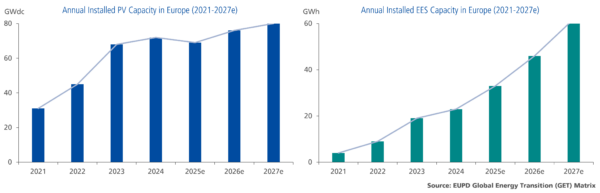
The most transformative trend in residential solar is the integration of home battery storage. Where batteries were once considered an optional luxury—primarily for backup power during outages—they are rapidly becoming essential for maximizing the functionality and financial viability of any new solar system.
Industry data shows that the ability to integrate storage (often called PV-plus-storage) is increasingly influencing whether projects proceed at all, particularly as grids become more congested and utility pricing structures evolve.
Navigating Peak Pricing and Grid Challenges
Utilities across the country are increasingly implementing Time-of-Use (TOU) rates. Under TOU rates, electricity prices soar during peak demand hours (typically late afternoon and early evening) and drop during off-peak hours.
If you have a traditional solar system without storage, you generate power during the day when rates might be low, and then you draw expensive grid power during the high-rate evening peak. This significantly erodes your savings.
This is where battery storage shines:
- Arbitrage: Your solar panels charge your battery during the day. When the utility rates spike in the evening, your home seamlessly switches to battery power, insulating you from those high peak charges. This process, known as energy arbitrage, dramatically improves your solar ROI.
- Curtailment Mitigation: In regions with high solar penetration, utilities sometimes have to “curtail” or limit the amount of solar power you can send back to the grid. If you have a battery, instead of losing that excess power, you store it for later use.
- Resilience: Beyond savings, batteries provide essential backup power. When the grid goes down due to severe weather or infrastructure issues, your home stays powered, ensuring safety and comfort.
At ProsperShield, we view batteries as the brain of your modern energy system. We specialize in designing robust, high-capacity battery solutions tailored to your specific energy habits and local utility structure. We ensure that your PV-plus-storage system is optimized for both maximum savings and ultimate resilience.
If you're ready to stop selling cheap power back to the utility and start using your own clean energy when it's most valuable, it's time to talk storage.
Schedule a free consultation
Ready to explore how a PV-plus-storage system can maximize your savings and resilience? Our experts cover 42 states and are ready to design a custom energy ecosystem for your home. Schedule a free consultation today.
3. Execution, Not Volume: Why Your Installer Matters More Than Ever
The global shift from focusing on sheer installation volume to prioritizing execution quality is perhaps the most important trend for homeowners to grasp. With panel prices declining, the primary cost differentiator in a solar project is now the soft costs—permitting, interconnection, labor, and system integration.
In a market flush with cheap equipment, many new, smaller installers might pop up offering extremely low headline prices. But if they lack the expertise in system integration, permitting, and long-term warranties, that 'deal' quickly turns into a disaster.
The Complexity of System Integration
Today’s solar system is not just panels; it often includes:
- Solar modules (PV)
- Inverters (which convert DC power to usable AC power)
- Battery storage
- Smart home energy management software
- Integration with existing HVAC or smart thermostats
This requires sophisticated engineering and installation expertise. A high-quality installer, often referred to as an EPC (Engineering, Procurement, and Construction) partner, is defined by their ability to seamlessly integrate all these components so they communicate efficiently and perform optimally for decades.
ProsperShield is built on this principle of integrated excellence. Our 24,000+ installations demonstrate our commitment to quality execution. We don't just install solar; we engineer energy solutions that last.
Red Flags to Avoid When Choosing a Solar Installer
- The Lowest Bid Trap: If a quote is significantly lower than others, ask tough questions. Are they using subpar wiring, cutting corners on flashing and roofing penetrations, or relying on inexperienced subcontractors?
- Lack of Storage Expertise: If an installer tries to talk you out of storage or seems unsure about integrating specific battery brands, they may not be prepared for the modern PV-plus-storage standard.
- Poor Permitting Track Record: One of the biggest causes of project delays in the U.S. is slow permitting. A seasoned installer knows local jurisdictions, has established relationships, and can navigate the red tape efficiently. This is crucial as the source article notes that permitting timelines increasingly shape deployment activity in the US.
4. The Whole-Home Approach: Solar as Part of a Larger Energy Strategy
While solar panels are the cornerstone of energy independence, they are only one part of a truly efficient home. The biggest savings come from treating your home as a holistic energy ecosystem. Why generate power if you're losing half of it through leaky windows or an outdated HVAC system?
This is why ProsperShield has broadened our offerings beyond just PV and batteries. We empower homeowners to tackle inefficiency at the source.
Optimizing Your Home’s Envelope
Before maximizing generation, you must minimize consumption. We offer essential home improvement services designed to lock in savings:
- HVAC Upgrades: Modern, high-efficiency heating and cooling systems drastically reduce your largest energy draw. Pairing a new HVAC system with solar means your panels are powering your climate control sustainably.
- Insulation and Air Sealing: Proper insulation keeps conditioned air in and external temperatures out. This reduces the load on your HVAC system, meaning you need fewer solar panels to achieve zero net energy.
- Roofing: Solar panels are a 25+ year investment. Your roof needs to be ready for that commitment. We offer high-quality roofing services to ensure your foundation is sound before we install your solar array.
By bundling these services, homeowners achieve synergy: the solar ROI improves because the energy demand is lower, and the home becomes exponentially more comfortable and valuable.
Ready to optimize your entire home? Explore our solar services including roofing, HVAC, and insulation, and discover how a whole-home solution saves you more.
5. Navigating the Complex Policy Landscape and Financing Options
While global trends drive down panel costs, the U.S. market remains heavily influenced by federal incentives (like the Investment Tax Credit, or ITC) and rapidly changing state and local policies (like net metering rules). The source article highlights that US installations are being shaped by incentive eligibility and trade enforcement, making expert guidance vital.
The Importance of Policy Alignment
Your installer must be a policy expert. They need to understand:
- Current Net Metering Rules: How does your utility credit you for excess power? These rules change frequently, and a good installer designs your system around the current (and anticipated future) policies to maximize your credits.
- Local Incentives: Beyond the federal ITC, many states, counties, or municipalities offer rebates or tax credits that can significantly reduce your out-of-pocket costs.
- Financing: We understand that solar is a major investment. ProsperShield offers flexible financing options that allow you to own your system and lock in your savings without requiring significant upfront capital.
Use Our Tools to Plan Your Investment
Understanding your potential savings is the first step. We encourage every homeowner to use our online tools to start planning their journey. Calculate your savings based on your location and current energy usage to see the tangible benefits of switching to solar.
Actionable Checklist: Securing Your Solar Future in the New Market
The stabilization of the global solar market means that homeowners are positioned perfectly to capitalize on lower equipment costs and higher efficiency. But success hinges on choosing the right partner. Here are your immediate next steps:
- Prioritize the Battery: Insist on a PV-plus-storage system. Do not install solar without planning for battery backup and peak-time savings. The cost of storage is coming down, and the financial benefit (especially with TOU rates) is massive.
- Verify Experience and Integration: Look past the panel price. Choose an established, experienced provider like ProsperShield (24,000+ installations) who can demonstrate expertise in complex system integration, not just basic installation.
- Assess Your Whole Home: Before sizing your solar array, evaluate your home's energy efficiency. Consider bundling solar with critical updates like HVAC or insulation to reduce your overall energy demand first.
- Confirm Local Policy Expertise: Ensure your installer is proficient in navigating local permitting, interconnection agreements, and state-level incentives in your region (we cover 42 states, ensuring policy alignment).
If you’re ready to take advantage of these trends and install a high-quality, fully integrated solar and storage system, we’re here to help. We are committed to providing value, quality execution, and long-term energy predictability.
Call us at 877-317-9079 or visit our website at prospershield.io to start your journey toward energy independence today.
Topics
Ready to Go Solar?
Get a free consultation and see how much you could save with ProsperShield solar.