
The Future of Solar: Why PV-Plus-Storage is Essential for Homeowners
Global solar trends are shifting the focus from sheer volume to quality execution and integrated energy storage. Learn why declining panel costs and mandatory batteries mean massive savings for your home.
ProsperShield Team
Solar Energy Experts
The Solar Industry is Maturing—And That’s Great News for Homeowners
If you’ve been watching the solar industry, you might have noticed some conflicting headlines lately. On one hand, global deployment has been explosive. On the other, experts are suggesting the pace of growth is stabilizing, transitioning from a sprint to a marathon.
For homeowners considering solar installation, this shift is not a warning sign; it's a massive opportunity. The global solar market is entering a new, more mature phase, defined by two major factors that directly benefit you: falling equipment costs and a critical new focus on quality execution and energy storage.
At ProsperShield, we’ve completed over 24,000 installations across 42 states, and we’re seeing firsthand how these trends are redefining what a successful solar investment looks like. The bottom line? The age of just installing panels is over. The future of home energy is integrated, resilient, and powered by PV-plus-storage.
Let’s dive into what these global market adjustments mean for your household savings, energy independence, and long-term home value.
1. The Great Price Adjustment: Lower Component Costs Are Driving Down Installation Prices
One of the most significant shifts happening globally is the structural oversupply of photovoltaic (PV) modules. Countries like China and India have ramped up manufacturing capacity significantly, exceeding the current deployable demand in many major markets, including the U.S. and Europe.
What Oversupply Means for You
In simple terms, when supply exceeds demand, prices fall. This structural surplus is embedding sustained downward pressure on the cost of the solar panels themselves. While labor and permitting costs remain regional, the falling price of the physical hardware translates into a lower overall investment for homeowners.
Actionable Insight: If you received a solar quote a few years ago and felt the price was too high, now is the time to look again. The cost landscape has shifted dramatically, making solar more accessible than ever before. This is the market correcting itself, and the consumer is the winner.
However, this affordability comes with a caveat: when panel costs drop, the competition among installers shifts away from who can offer the cheapest component, and toward who can offer the best service and integration.
2. The Shift from Volume to Value: Why Execution Quality is Now King
When PV modules were scarce or expensive, the goal was often simply rapid deployment—installing as many systems as possible. Now, with lower component costs, the market is demanding higher standards for execution, system design, and long-term reliability.
This is fantastic news for homeowners, as it weeds out the 'fly-by-night' installers and rewards experienced, comprehensive providers like ProsperShield.
Three Pillars of Quality Execution
A. Policy Alignment and Permitting Expertise
In the U.S., installation volume is increasingly shaped by complex factors like regional permitting timelines, utility interconnection rules, and incentive eligibility. Navigating this bureaucratic maze requires deep regional expertise.
For example, Net Metering rules vary drastically even between neighboring states. A quality installer doesn't just put panels on the roof; they optimize the system size and design to maximize your specific local incentives and avoid costly delays. Serving homeowners across 42 states, ProsperShield has the breadth of experience necessary to handle these regional complexities efficiently.
B. Comprehensive Home Energy Management
True quality means looking beyond the solar panels. It means evaluating your entire home energy ecosystem. Are your attic and walls properly insulated? Is your HVAC system old and inefficient? If you generate clean energy but lose 30% of it through poor insulation or an aging air conditioner, you are wasting money.
This is why ProsperShield offers a full suite of home improvements—including HVAC, insulation, and roofing—alongside solar and storage. We treat your home as a single, integrated energy unit, ensuring every dollar invested delivers maximum energy efficiency.
C. Long-Term Partnership and Warranty Support
When the focus is on volume, customer support often suffers. When the focus shifts to execution quality, the installer becomes a long-term partner. You need a company that will be around in 10 or 20 years to honor warranties, perform maintenance, and help you upgrade.
Tip: When choosing an installer, look at their track record, not just their price. Ask about their warranty coverage and customer service reputation. A slightly higher initial investment in a reputable company guarantees decades of trouble-free savings.
3. PV-Plus-Storage: Why Batteries Are No Longer Optional
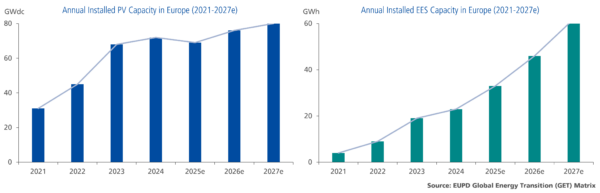
Perhaps the most crucial global trend impacting U.S. homeowners is the indispensable rise of energy storage. The source article highlights that energy storage is becoming essential for project viability across all segments—residential, commercial, and utility-scale.
For the residential consumer, incorporating a home battery (like the Tesla Powerwall or Enphase IQ Battery) is no longer a luxury upgrade; it is quickly becoming the standard for maximizing savings and ensuring true energy independence. This is the definition of PV-plus-storage.
The Three Forces Making Storage Mandatory
A. Maximizing Financial ROI Through Peak Shaving
Many utility companies, facing grid congestion and high demand, are implementing Time-of-Use (TOU) rates. This means electricity costs significantly more during peak evening hours (e.g., 4 PM to 9 PM) than during the day.
If you have solar panels but no battery, you export excess power back to the grid during the day (when rates are low) and buy expensive grid power back during the evening peak.
A battery changes this equation entirely. It stores the solar energy you generate during the low-demand midday hours and automatically deploys that stored power during the expensive evening peak. This practice, known as peak shaving, dramatically increases your financial returns.
B. Grid Resilience and Curtailment Risk
As more solar comes online, especially in dense areas, the grid can become overwhelmed. This leads to curtailment, where the utility forces solar systems to shut down temporarily to prevent grid instability. If your system is curtailed, you lose out on generation and savings.
Storage mitigates this risk. Instead of being forced to turn off, your excess energy has somewhere to go—right into your battery. Furthermore, in areas facing increasing natural disasters, aging infrastructure, or extreme weather, a battery provides essential backup power, allowing your critical appliances (lights, fridge, internet) to stay on during outages.
C. Changing Utility Policies
In markets where traditional Net Metering is being replaced by less favorable compensation structures (like Net Billing or Feed-in Tariffs), storage is the key to maintaining savings. When the utility pays less for exported power, the most valuable energy is the energy you consume yourself. A battery ensures you self-consume the maximum amount of energy generated, insulating you from future policy changes.
Ready to find out how much a PV-plus-storage system can save you? The technology is more affordable and effective than ever. Schedule a free consultation with a ProsperShield energy specialist to design a fully integrated system tailored to your home.
4. Navigating the Complexities of Incentives and Financing
The solar market's adjustment phase also means incentives are constantly evolving. While the federal Investment Tax Credit (ITC) remains robust (currently 30% for solar and storage), state-level incentives, rebates, and local financing options are highly dynamic.
Actionable Tips for Securing Maximum Savings
Tip 1: Lock in the Current ITC
The most stable and significant incentive is the federal ITC. It applies not just to the solar panels but also to qualified home battery storage installed alongside the solar system. By acting now, you lock in the current, highest incentive level.
Tip 2: Understand Local Rebates and SRECs
ProsperShield operates in 42 states, meaning we deal with hundreds of unique local programs. We help homeowners identify and apply for localized incentives, such as Solar Renewable Energy Certificates (SRECs) or state-specific tax breaks, which can significantly reduce the total cost of ownership.
Tip 3: Explore Integrated Financing Options
A mature solar market offers mature financing solutions. We provide a range of financing options that bundle the cost of solar, battery storage, and even related home improvements (like roofing or HVAC) into one simple payment, often resulting in monthly payments that are lower than your previous utility bill.
Need help calculating your potential returns? Use our quick online tool to Calculate your savings based on your average monthly bill and location.
5. The Holistic Home: Integrating Solar, Roofing, and Efficiency
The global market trend toward system integration reinforces ProsperShield’s core philosophy: solar is not a standalone product; it’s the capstone of a truly efficient home.
When you work with a comprehensive provider, you ensure that your roof—the foundation of your solar investment—is structurally sound and warrantied for the next 25 years. If your roof needs replacement, integrating that service with your solar installation simplifies the process, often making the roofing costs eligible for the federal ITC when done as part of the total project.
The Energy Efficiency Checklist
Before installing solar, consider these key efficiency upgrades to maximize the value of every kWh your panels produce:
- Roofing: Ensure a high-quality, reflective, or energy-efficient roof is installed simultaneously with the solar system. This prevents costly removal and reinstallation later.
- Insulation: Proper attic and wall insulation (R-49 in the attic is often recommended) is the cheapest energy you can buy. It reduces the load on your HVAC system, allowing you to install a smaller, less expensive solar array.
- HVAC: Replacing an aging heating and cooling system with a modern, high-efficiency heat pump can cut your energy consumption dramatically, especially in climates requiring heavy air conditioning or heating.
By addressing these foundational elements, you ensure your solar investment is right-sized and operates at peak efficiency from day one.
6. Your Action Plan for Energy Independence in the New Solar Era
The overarching message from the current global solar adjustment is clear: it is now safer, more affordable, and more effective than ever to go solar, provided you prioritize quality and integration.
Here are the practical steps every homeowner should take now to capitalize on these trends:
Step 1: Conduct a Comprehensive Energy Audit
Start by understanding where your energy is currently going. A professional audit will identify energy leaks, inefficient appliances, and areas where insulation or HVAC upgrades are needed. This ensures your solar system is sized perfectly for your optimized consumption, not your current wasteful consumption.
Step 2: Prioritize PV-Plus-Storage in Your Design
Do not view the battery as optional. The market has spoken: integrated storage is necessary for financial viability, grid resilience, and future-proofing your home against rising peak power prices and changing utility rules.
Step 3: Vet Your Installer for Execution and Experience
Look for companies with a proven track record, extensive service offerings (like ProsperShield’s comprehensive services across roofing, HVAC, and solar), and deep regional expertise in permitting and incentive navigation.
Ask these three critical questions:
- How many installations have you completed in my state?
- Do you handle all permitting and utility interconnection paperwork?
- What specific battery storage options do you integrate, and how do they optimize my local TOU rates?
Ready to partner with an expert? If you live in one of the 42 states we serve, let our team guide you through this exciting new phase of solar energy. Call us at 877-317-9079 or Explore our solar services to start your journey toward true energy independence.
Conclusion: The Maturing Market is Your Advantage
The solar industry is no longer defined by breakneck volume growth; it is defined by sophisticated execution, strategic integration, and resilient energy systems. This shift guarantees lower component costs and a higher standard of service, directly benefiting homeowners seeking reliable, long-term savings.
The future of home energy is here, and it’s powered by intelligent PV-plus-storage systems installed by expert partners. Don’t wait for prices to stabilize further; the opportunity to lock in lower equipment costs and current federal incentives is now.
Topics
Ready to Go Solar?
Get a free consultation and see how much you could save with ProsperShield solar.